
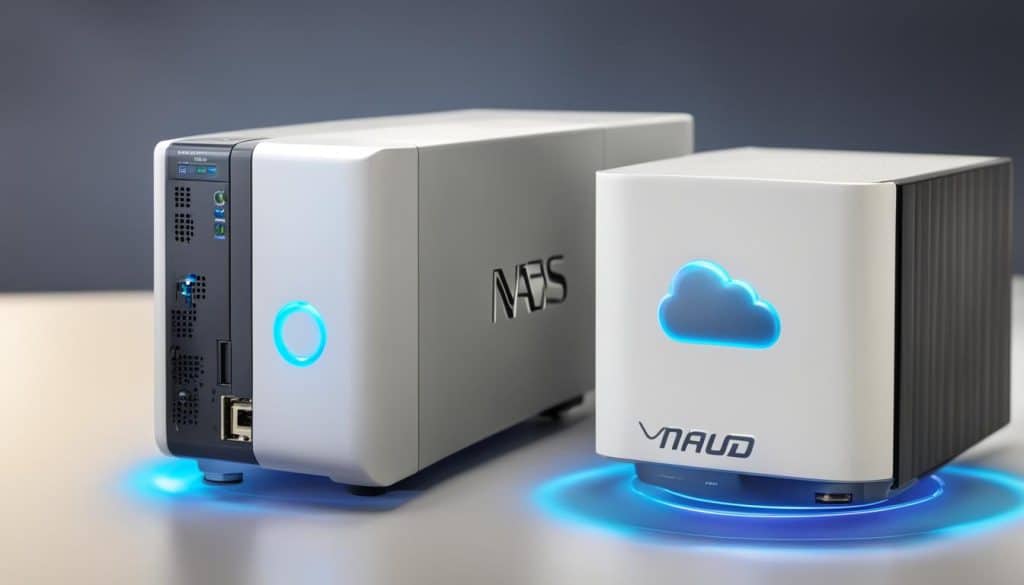
In today’s digital age, data storage is essential for both personal and professional life. Cloud storage is everywhere. Many of us hand our files to third parties. There’s another way: network-attached storage (NAS). It offers more privacy, control, and security. This article, NAS vs Cloud Storage, shows when you don’t need the cloud—and why NAS can be the smarter way to manage your data.
Key Takeaways:
- NAS provides greater privacy, control, and security compared to cloud storage.
- Cloud storage offers convenience and scalability but raises concerns about data privacy and control.
- NAS eliminates the reliance on the internet, ensuring constant accessibility to your data.
- Cloud storage can be costly, especially for large amounts of data transfers.
- Consider your specific needs and priorities when choosing between NAS and cloud storage.
What Is the “Cloud”?
The “cloud” refers to a network of remote computers used to store and process data through platforms known as cloud storage services. These services include popular providers, web apps, social networks, and streaming platforms that make your files and data accessible from anywhere. While cloud storage services offer convenience and flexibility, they also raise concerns about privacy and security.
Every online action leaves a digital trail, allowing personal information to be collected and used to build data profiles. And because cloud providers can change their terms of service at any time, there’s always uncertainty about what happens to your data in the future.

It is important to carefully consider the risks and advantages of cloud storage before entrusting your data to these services. While cloud storage offers easy access to files and scalability, it also comes with potential privacy and security concerns. Understanding the implications of using cloud storage will help you make an informed decision about the best storage solution for your data.
Advantages of NAS
Network-attached storage (NAS) offers several benefits over cloud storage. One of the main advantages of NAS is the level of control it provides over your data and storage resources. With NAS, you have the ability to set permissions, create file trees, and define user access, giving you greater flexibility and security. This control is especially important for organizations that handle sensitive data or have strict compliance requirements. By keeping your data on-site, NAS eliminates the need to rely on third-party access, red